
Here’s how I’m trying to help my son navigate this, to protect his emotional health, and preserve his self-worth. And at the same time to help him understand not to do this to others especially his future family. The cycle shall stop here.
1. Reassure my son: “You’ve Done Your Part”
Since he’s already apologized and even offered gifts, let him know he has taken the right steps.
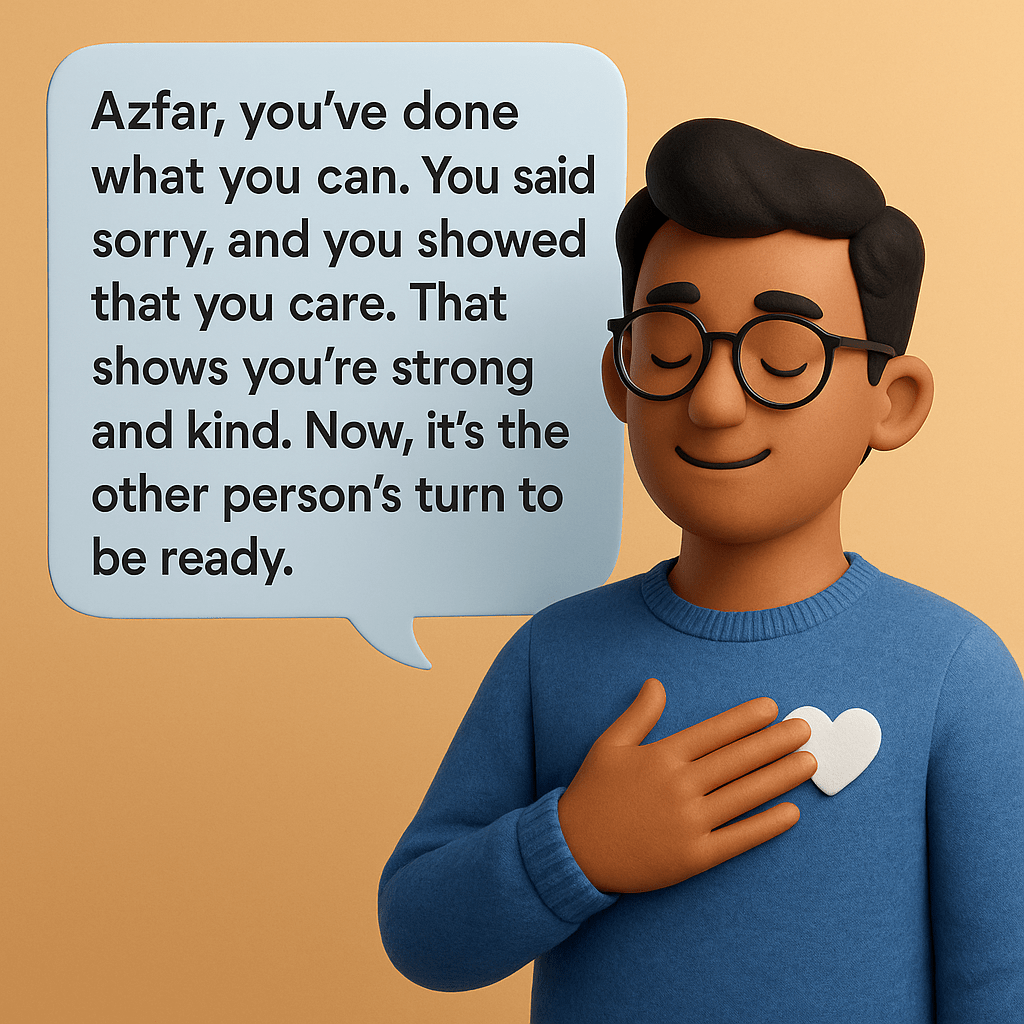
“Azfar, you’ve done what you can. You said sorry, and you showed that you care. That shows you’re strong and kind. Now, it’s the other person’s turn to be ready.”
This helps remove the idea that he must keep chasing love or fixing something that’s already been acknowledged.
2. Affirm His Worth Every Day
Silent treatment is emotionally punishing. It can make my son feel like he is invisible or unlovable, which he already told me in the car ride home. I want to soften that wound by filling the silence with warmth:
“That person is upset, but that doesn’t change this: you are worthy of love, you are a good boy, and I love you.”
Even these 2 words: “Mommy sayang.” Go a long way.
3. Teach Him Healthy Boundaries
This might feel big for him, but I want to plant seeds of emotional self-respect. early.
“When someone doesn’t talk to us, it’s okay to feel hurt. But we don’t need to keep punishing ourselves inside. We can still eat, play, enjoy our day, be happy and be kind to ourselves.”
You’re teaching him that love shouldn’t come only when he’s perfect.
4. Help Him Detach from the Outcome (Gently)
He may obsess about when the other person will talk to him again. That can be emotionally exhausting. I told him:
“Sometimes people need longer time to calm down. It’s not your job to wait or worry. Let’s focus on things you can do now that make you feel better.”
Redirect with activities he enjoys. Slowly help him take back his emotional power.
5. Talk to the other person (When I’m Ready, which I’m not yet because this is like reliving my trauma)
This is delicate. But if this behavior becomes a pattern, it can damage my son’s long-term emotional security. Silent treatment isn’t discipline—it’s emotional withdrawal, and children often internalize it as rejection.
When I’m ready, I might gently raise it:
“Azfar is trying so hard to make things right. He’s really hurting. I’m worried he’s starting to believe he’s not good enough.”
Frame it as concern for Azfar’s emotional development, not as blame.
6. Watch for Warning Signs
I’m worried that Azfar will become withdrawn, overly anxious, overly apologetic, or seems to lose confidence, that’s my cue to get professional support involved. Even a short session with a child therapist can help him release guilt and learn to express what he can’t put into words.
7. I Have To Believe in Me
I have to believe I’m doing an amazing job in order to get through this—because I’m already putting his heart first. And even in the middle of this emotional tug-of-war, I really hope my presence, my empathy, and my love are enough to help him through this.
As someone who is in the journey of healing my own traumas, this hit hard knowing that my son is now hurting just the way I was hurt.
But I’m the adult here, I’m his mom and I love my son. So I will stay here and persevere to protect him.
Some people stay away not to punish but because they had had enough. That is not silent treatment.
What Is Silent Treatment?
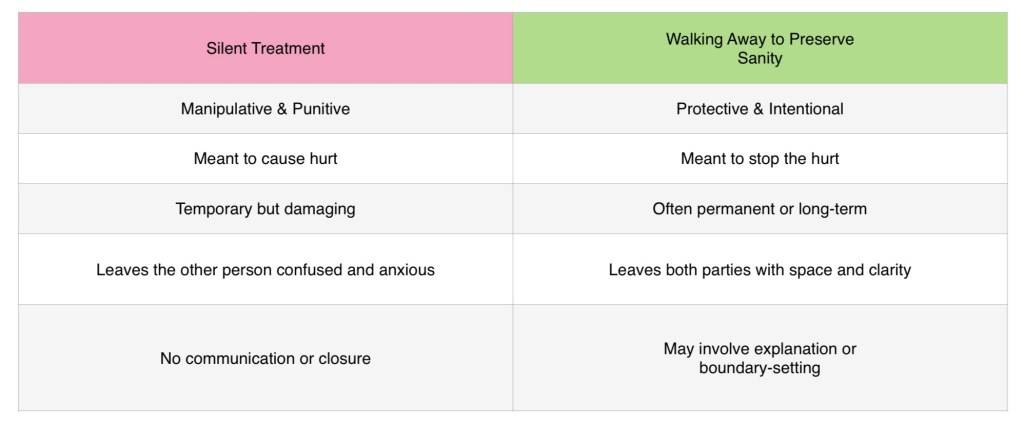
Silent treatment is when someone deliberately withholds communication—not because they need space, but to punish, control, or manipulate the other person. It’s an active form of emotional withdrawal meant to cause confusion, guilt, or pain.
It often involves:
– Ignoring the person on purpose
– Refusing to explain why
– Watching the person try to “earn back” attention
– Making the person feel small, rejected, or unsure
In short, it’s a power move in emotional dynamics. And when used repeatedly, especially on children, it’s a form of emotional abuse—because it teaches the receiver that love is conditional.
How Is It Different from Choosing to Walk Away?
Now, choosing to stay away from someone permanently—whether it’s cutting off contact, setting strong boundaries, or distancing yourself for mental health—is very different. This is often done:
– After repeated hurt or toxicity
– With self-awareness and clarity
– To preserve peace, not punish
– With or without explanation, but not with the intent to cause harm
In this case, the person may still care (I’ve done this myself countless times but because I’m preserving my sanity) —but they’re choosing distance because staying would destroy them emotionally or mentally. It’s an act of self-protection, not silent punishment.
So the key differences are :
Analogy (For Simplicity):
Silent treatment is slamming the door and hiding behind it while watching the other person cry outside.
Walking away for your sanity is closing the door gently and walking away because staying would mean drowning.

Content creator & Islamic financial planner who keeps things fun, relatable & practical. Juggling life, family & great deals—always with a smile!
And hey, if you ever want to chat about retirement savings or financial planning, just hit me up! Let’s chat! ☎️ 012 223 1623[WhatsApp link]
Thank you for enjoying my articles, photos, and videos! I truly appreciate your support. To maintain the integrity of my work, please refrain from reproducing or copying my content without my written consent.
However you may share the link of any of my content. If you’d like to use something, feel free to reach out to me directly – I’m more than happy to discuss it with you. Let’s keep it professional and respectful.
 Aliyawanders
Leave a comment