
It all started when a friend casually asked, “Eh, what does a telegram even look like?” (Yeah, we’re random like that.)
Silence.
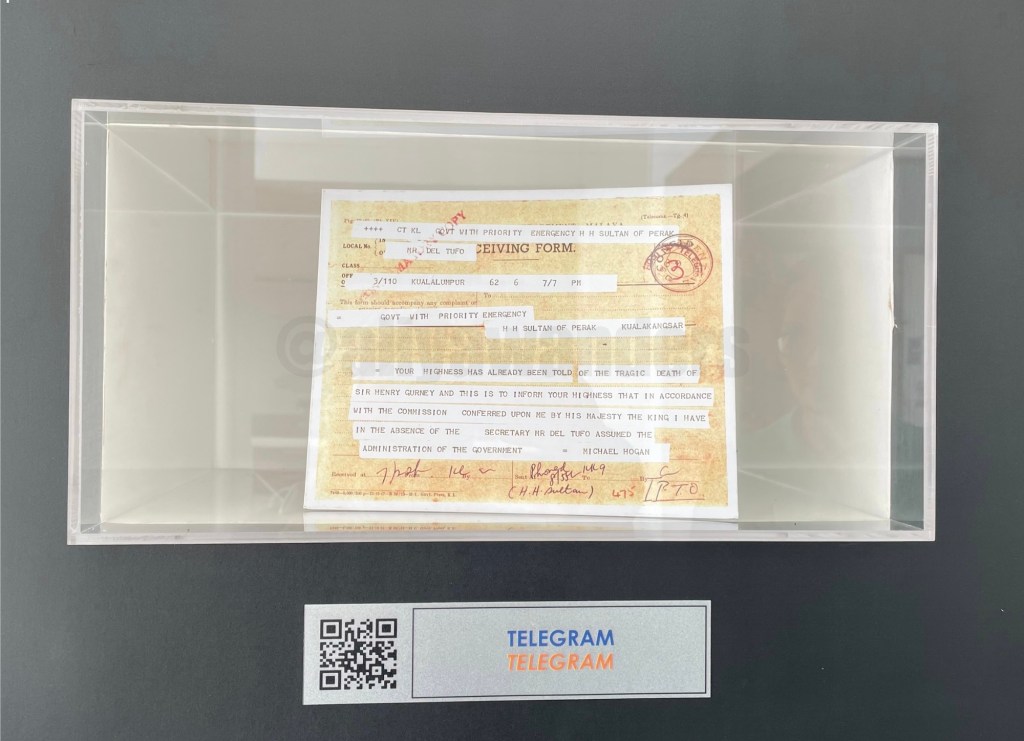
Turns out, not a single one of us had ever seen a real telegram. We’ve heard of it, sure. My mom used to describe it as some ultra-urgent (and ultra-pricey) message, but I wouldn’t even know how to send one. Do you Google it? Show up at the post office looking confused? Pray that a telegram fairy appears?

That one innocent question spiraled into a full-blown discussion about public phonescand just how ancient we are for having actually used them. One thing led to another, and then, one of my friends who works for TM suggested —“Why don’t you guys visit the Muzium Telekom!”
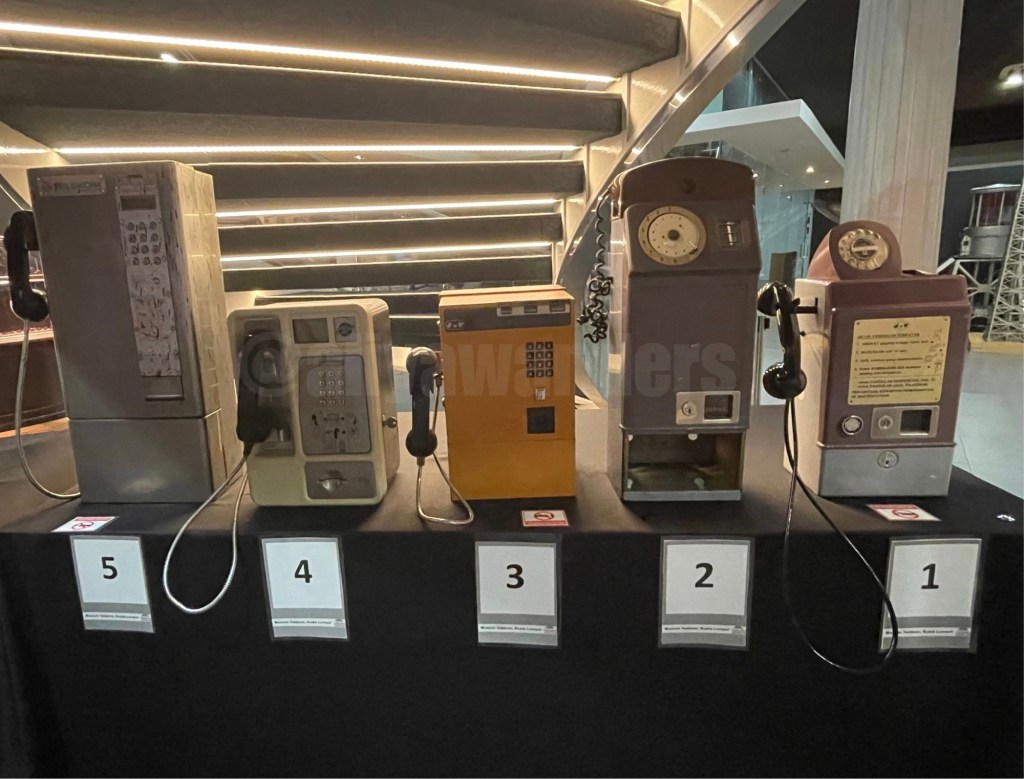
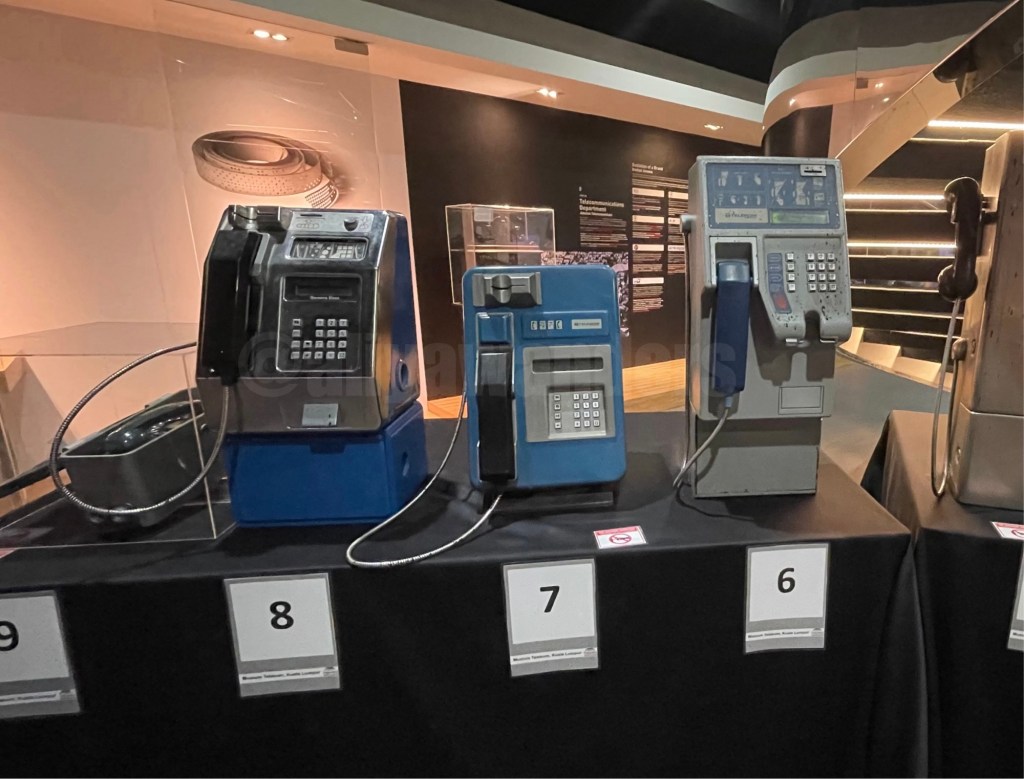
Well, what else could I do? Other than round up the boys and drag them to Muzium Telekom?
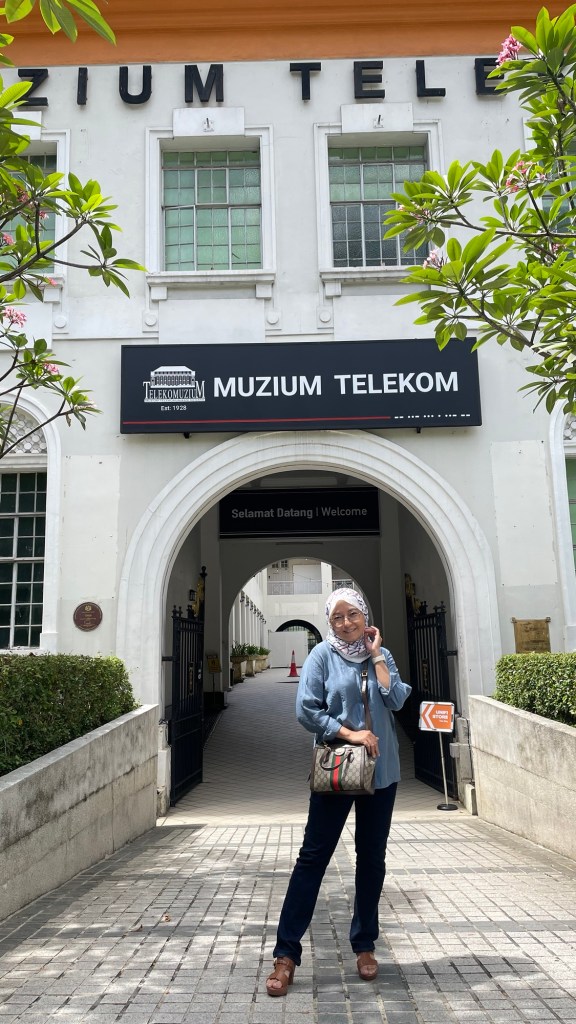
Walk into the museum, and the first thing you’ll see is a giant timeline showing how communication shaped Malaysia and the world.
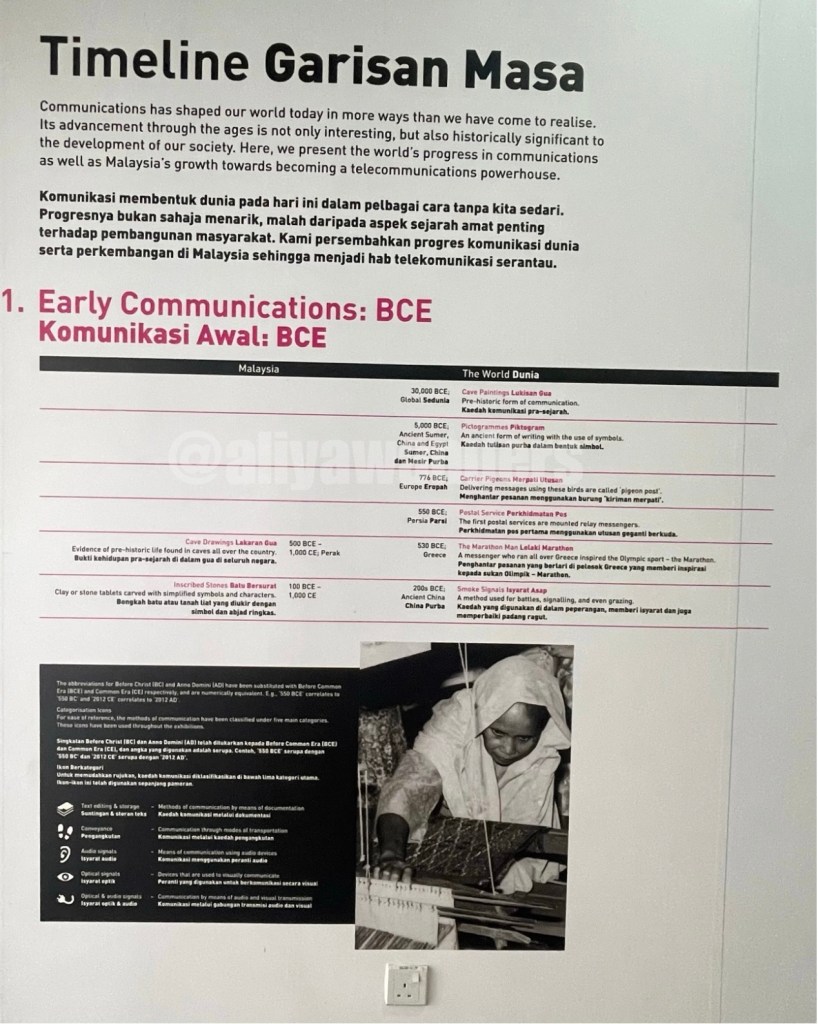
Right here is a side-by-side comparison of both. Fun fact: cave drawings in Malaysia date back to somewhere between 500 BCE – 1000 CE, mostly in Perak. Then came inscribed stones, around 100 BCE – 1000 CE.
Inscribed stones are apparently one of the earliest forms of portable communication—at least, according to this description. So, of course, I turned to my husband and joked, “Imagine having to carry a stone this big just because it’s considered portable?”
And this man, without missing a beat, goes, “Well, technically, if you can lift it and move it somewhere else, it’s portable.”
…Okay. Fair point.
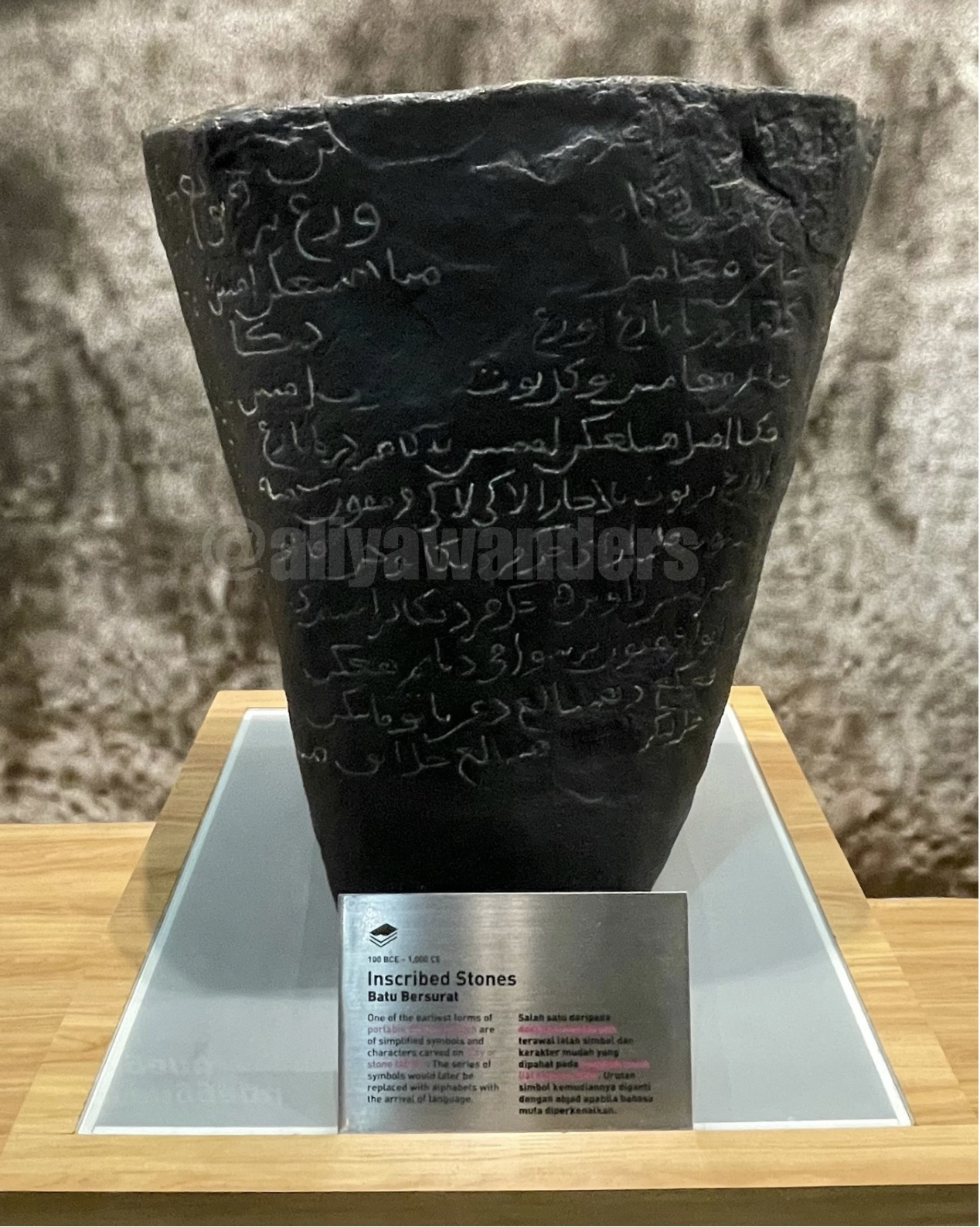
So yeah, we’ve been finding ways to leave messages for centuries—from carving on rocks to spamming texts and memes. Some things never really change!
Did you know that TM and Pos Malaysia used to be one entity? Back in British colonial days, they were called the Postal & Telegraph Department and were represented by a simple P&T logo.
It wasn’t until 1946 that they split into two, with the telecom arm now bearing its own logo—featuring the words Telecom Dept and an old-fashioned dial phone (probably the new model back then). Later, after Malayanisation in 1957, Jabatan Talikom (yes, with an “A” and an “I” back then) came to be, while still maintaining the old-fashioned dial phone as its logo.
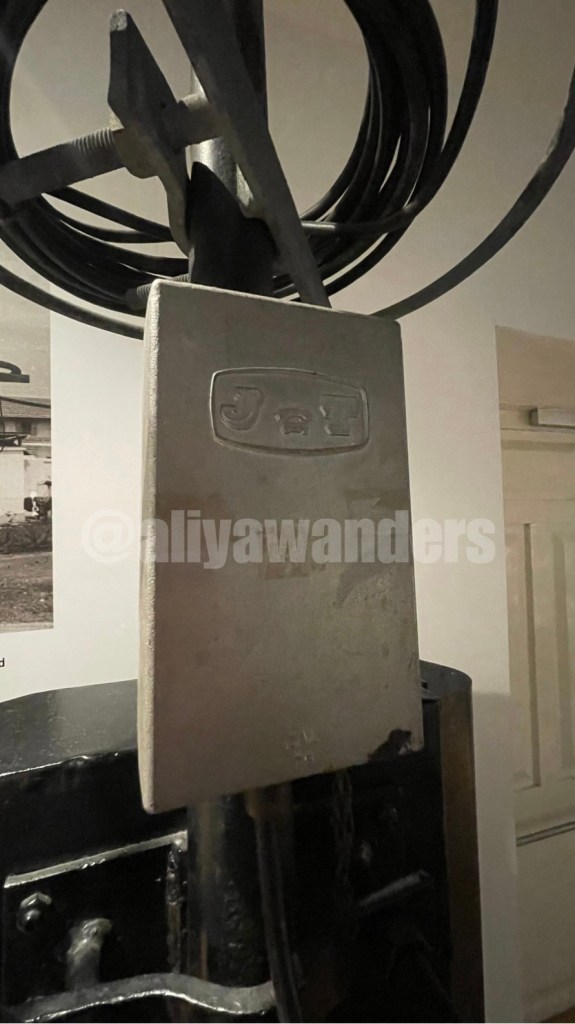
But not long after, in 1961, a new emblem—‘JT’—was introduced, representing Jabatan Talikom, with a common communication apparatus placed between the letters.
And that’s when my brain did a little click. I’ve seen that old Telekom logo before! It just never registered—until now. Seeing it at the museum was like opening a time capsule. My grandparents had a landline for as long as I could remember, and let me tell you, I abused that thing.
I used to pretend I was some super important office worker, dialing random numbers with the seriousness of a CEO, waiting dramatically for the rotary dial to spin back with that trrrrrr sound. Very official. Very corporate.
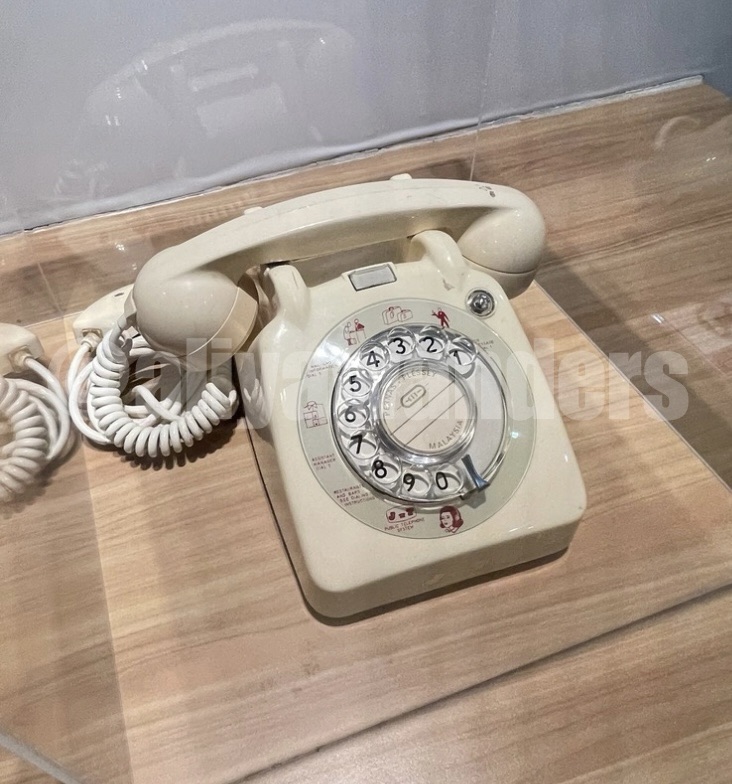
Now that I think about it… I probably caused a few calls not to go through.
Oops.
Then came the push-button telephone—no more waiting for the rotary dial to spin back before dialing the next number. But with the convenience of faster dialing came a new problem: endless phone conversations that sent monthly bills through the roof. Parents, in their infinite wisdom, devised the most ingenious strategy—locking the keypad.
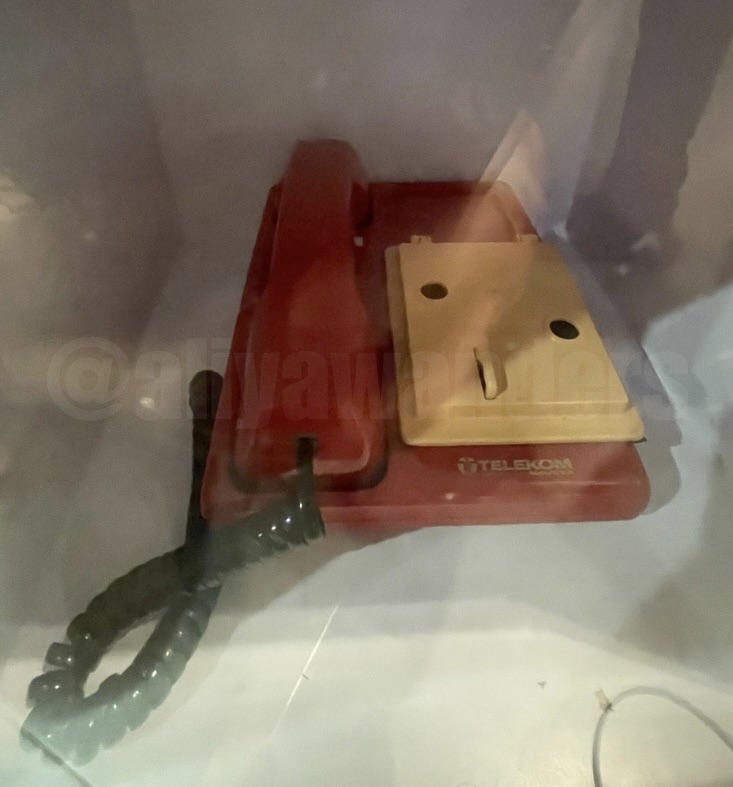
Nothing much to see here—just a push-button phone with a locked keypad. Only emergency numbers like 4 and 9 were accessible. But teenagers (and by teenagers, I mean us), being the resourceful creatures they are, found a workaround—using a wire to dial numbers.
Back then, phone bills weren’t cheap, with calls charged by blocks of seconds or minutes.
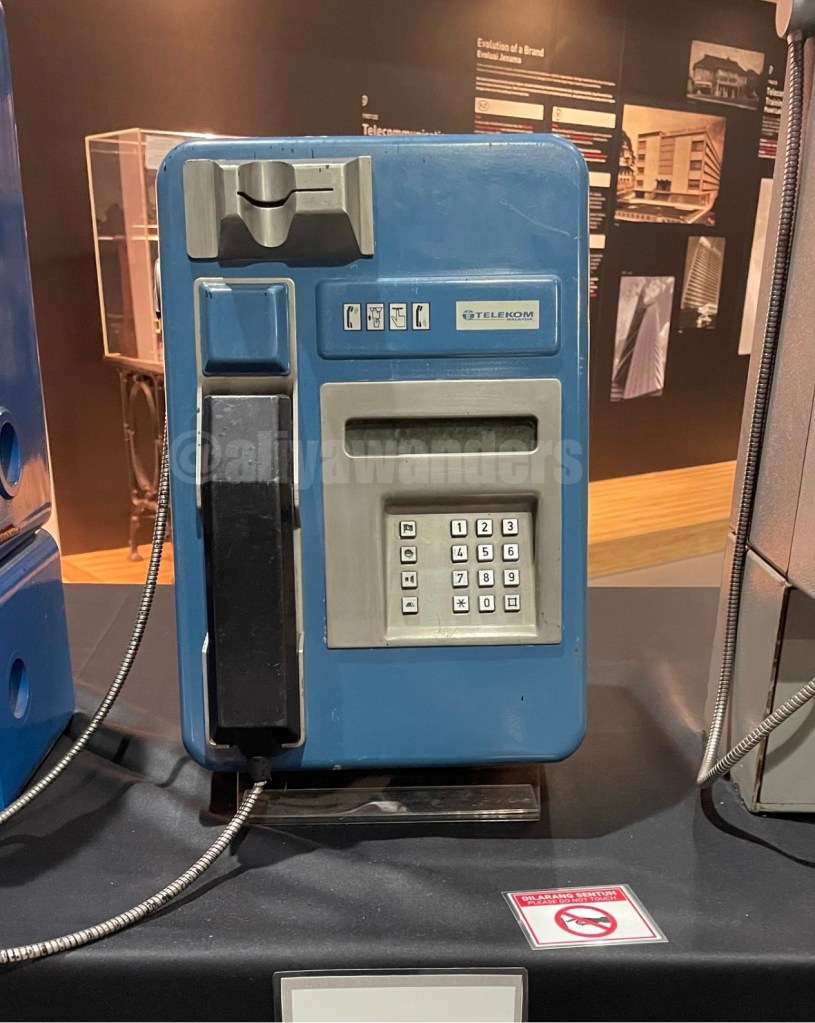
By the time I got to high school, public phones were everywhere. First, the ones that ate coins, then later, the fancy ones that used phone cards. I really wish I had kept all the phone cards I bought—they would’ve made some solid nostalgic memorabilia.
And let’s be real—who else tried pressing * and # at the same time, hoping to trick the machine into giving extra talk time? We knew it probably wouldn’t work, but hey, desperate times, right?
If TM ever wants to spice things up at the museum, I’d love to see more hands-on stuff—like actually trying out a Morse key or messing around with a rotary dial phone. Imagine letting people struggle with dialing a full number on that thing. Now that’s an experience.
If you’re even a little bit curious about how communication in Malaysia went from batu bersurat to satellites, go check out Muzium Telekom. The entrance fee won’t drain your wallet, and honestly, it makes for a pretty interesting (and educational) trip.

How to get to Muzium Telekom, Bukit Nanas?
We drove and parked at Menara Olympia, but if you’d rather skip the parking hassle, just take the Monorail and get off at Bukit Nanas Station. You can visit both KL Tower and Muzium Telekom in one trip—might as well make the most of it!
Anyway, here are the details for Muzium Telekom in both Bukit Nanas and Taiping. I’ve never been to the one in Taiping, but hey, if you’re heading up north, might as well, right?
Muzium Telekom, Kuala Lumpur
Jalan Raja Chulan, Kuala Lumpur, 50200 Kuala Lumpur, Wilayah Persekutuan Kuala Lumpur
Operating hours : Daily 9am – 5pm
Contact Number : +6011-6337 8118
Telegraph Museum, Taiping
2664, Jalan Steen, 34000 Taping,
Perak
Operating hours : Daily 9am – 5pm
Contact Number : +605-801 0682

Content creator & Islamic financial planner who keeps things fun, relatable & practical. Juggling life, family & great deals—always with a smile!
And hey, if you ever want to chat about retirement savings or financial planning, just hit me up! Let’s chat! ☎️ 012 223 1623[WhatsApp link]
Thank you for enjoying my articles, photos, and videos! I truly appreciate your support. To maintain the integrity of my work, please refrain from reproducing or copying my content without my written consent.
However you may share the link of any of my content. If you’d like to use something, feel free to reach out to me directly – I’m more than happy to discuss it with you. Let’s keep it professional and respectful.

 Aliyawanders
Leave a reply to Sophie Poe Cancel reply